



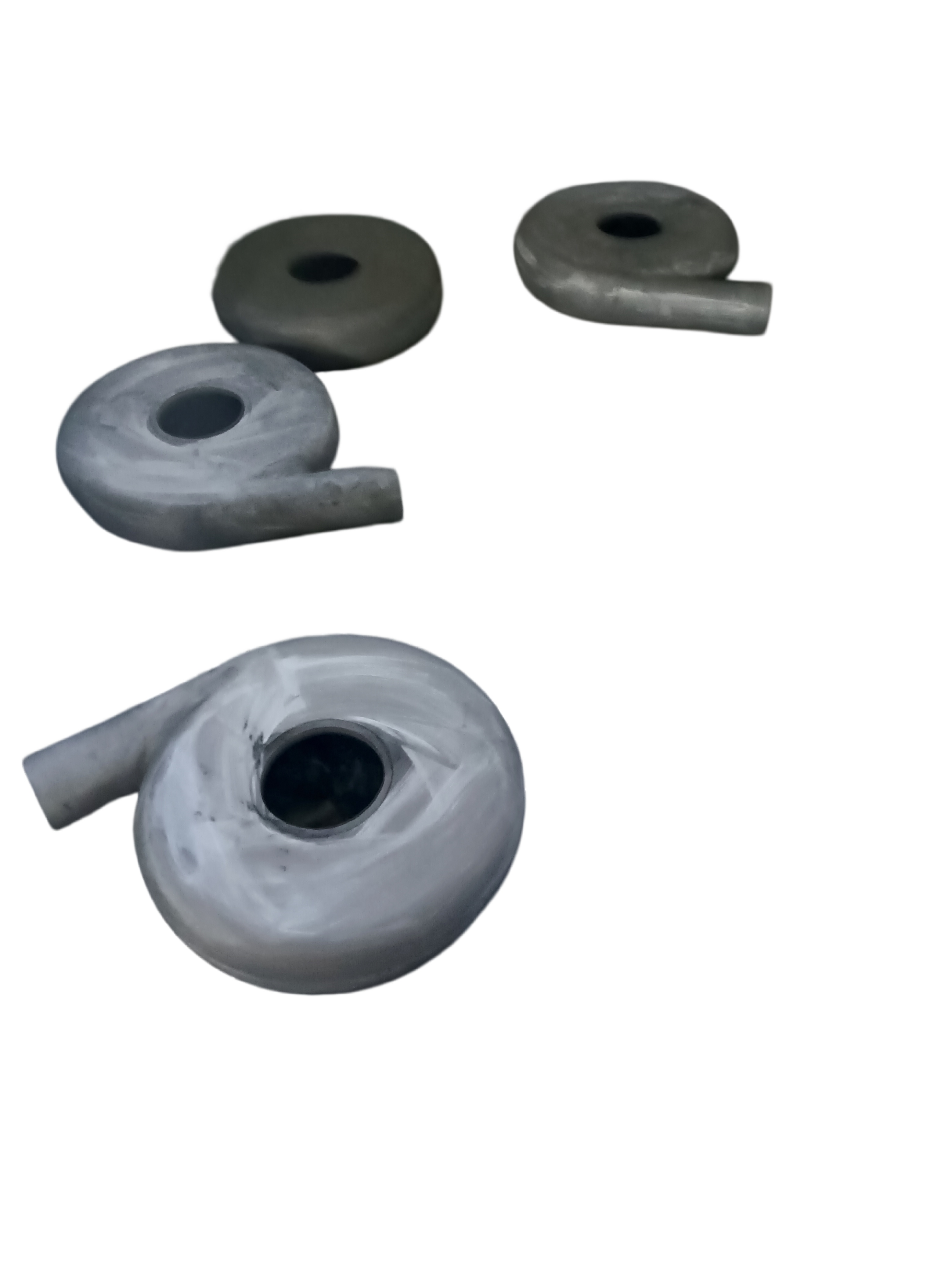



1:High temperature tolerance
2:High thermal conductivity
3:Excellent oxidating resistance.
4:Corrosion resistance
5.Long service life
Inquiry
|
Application of Silicon Carbide in Slurry Pump Casings, Covers, Impellers, and Other Components
Due to its extremely high hardness and excellent corrosion resistance, silicon carbide (SiC) has become an ideal material for manufacturing critical flow-passing components of slurry pumps. These components come into direct contact with highly abrasive slurries containing solid particles, making them key factors in determining the pump's service life and technical performance.
Below is a detailed breakdown of the application and advantages of silicon carbide in these core slurry pump components:
1. Pump Casing (Liner/Volute Liner)
-
Core Function: As the outer shell that contains the slurry and converts kinetic energy into pressure energy, it is the area most severely affected by erosion.
-
SiC Application: Typically uses a metal outer shell lined with silicon carbide ceramic, or segmented silicon carbide liners assembled to form a sealed volute chamber.
-
Key Advantages:
-
Extremely Long Service Life: Wear resistance is 3 to 10 times higher than high-chromium alloy and other highly wear-resistant metal materials. Overall pump life can reach 2-3 times that of traditional metal pumps.
-
Structural Stability: The metal shell ensures pressure-bearing capacity, while the SiC liner resists wear and corrosion — a combination of strength and durability.
-
2. Pump Cover and Liners (Side Liners/Throatbush)
-
Core Function: Protects the internal structure of the pump casing while itself being subject to direct friction from high-velocity slurry.
-
SiC Application: Used as silicon carbide ceramic lining plates or integral silicon carbide components installed on the inner side of the pump cover and front/rear liners.
-
Key Advantages:
-
Excellent Corrosion Resistance: Chemically inert, capable of withstanding various acidic and alkaline slurries within a pH range of 1 to 14, with no limitations from chlorides or fluorides.
-
High Impact Resistance: New processes (e.g., full vacuum forming) can increase impact resistance by up to 3 times, overcoming the brittleness traditionally associated with ceramics.
-
3. Impeller
-
Core Function: The main work-performing component of the pump. It rotates at high speed to impart kinetic energy to the slurry, demanding exceptional wear resistance and dynamic balance.
-
SiC Application: Manufactured through integral sintering of silicon carbide ceramic or resin/SiC composite casting.
-
Key Advantages:
-
High Efficiency & Energy Savings: Hydraulic models with special designs (e.g., banana-shaped vanes), combined with the rigidity of SiC, ensure that efficiency does not drop significantly even after wear. The pump maintains high efficiency for extended periods, with pump efficiency reaching over 89.8%.
-
High Reliability: Hardness reaches 9.2–9.5 on the Mohs scale (second only to diamond). It easily handles harsh conditions such as high slurry concentrations (up to 60%) and large particles, resulting in a low failure rate.
-
Summary Comparison: SiC Components vs. Traditional Metal Components
For a more intuitive understanding of the advantages, here is a comparison of key metrics:
| Parameter | Silicon Carbide Ceramic Components | Traditional High-Chromium Alloy Components |
|---|---|---|
| Wear Life | Extremely long (3–10 times that of metal pumps) | Baseline (short; some fail within six months under harsh conditions) |
| Corrosion Resistance Range | Broad (pH 1–14, resistant to various acids and alkalis) | Limited (vulnerable to specific acids, alkalis, and chlorides) |
| Hardness (Mohs) | 9.2–9.5 (second only to diamond) | Lower (approx. 6–8) |
| Operating Efficiency | Persistently high (efficiency degrades very slowly after wear) | Efficiency drops rapidly with wear |
| Maintenance Cost | Low (reduces downtime for replacements by up to 60%) | High (frequent replacement of spare parts) |
Practical Application Examples
In actual mining procurement, for models such as the "6/4D-AHD" slurry pump, critical wear parts including the wear-resistant auxiliary impeller, wear-resistant pressure-relief cover, front and rear liners, and volute liner are all explicitly required by buyers to be made of silicon carbide ceramic material to withstand the harsh conditions of mining operations.


