






1. Good Oxidation resistance
2. Excellent Corrosion resistance
3. High temperature tolerance
4. Perfect Bending strength
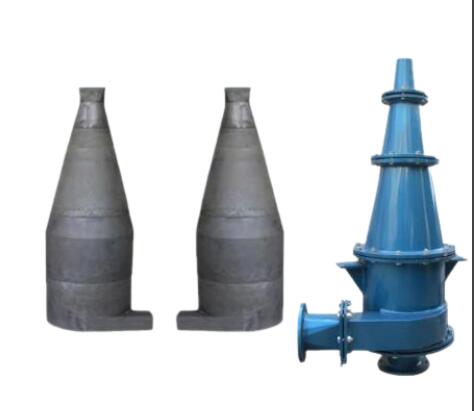
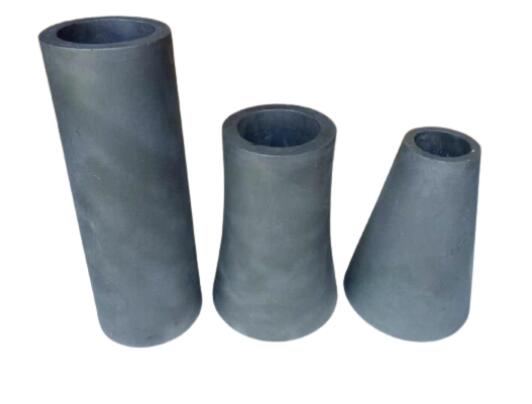
Silicon carbide cone pipe lining for pulverized coal powder conveying Property:
◊ Superior wear resistance, impact resistance and corrosion resistance
◊ Excellent flatness and temperature resistance up to 1380℃
◊ Excellent oxidation resistance
◊ Good dimensional control of complex shapes
◊ Easy installation
◊ Longer service life ( about 5 times more than that of alumina ceramic and 6 times more than that of polyurethane)
Inquiry
|
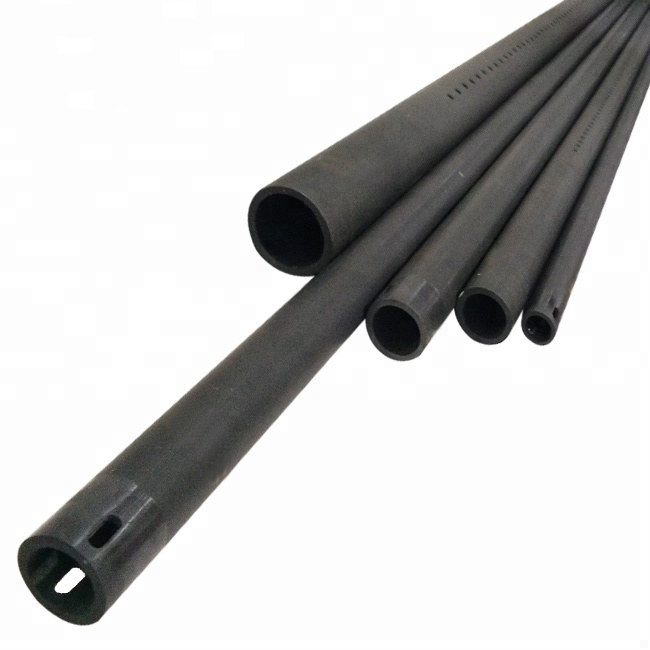
A silicon carbide roller, often referred to as an SiC roller, is a high-temperature load-bearing component in the form of a tube or rod. It is primarily made from silicon carbide (SiC), a high-performance engineering ceramic, through specialized processes such as reaction bonding, pressureless sintering, or recrystallization.
It is a core component of modern industrial kilns, especially high-temperature roller hearth kilns, and its performance directly determines the kiln's production efficiency, product quality, and operating costs.
2. Core Characteristics and Advantages
The silicon carbide material imparts exceptional properties to the rollers, far surpassing traditional alumina or metal rollers:
-
Extremely High Temperature Resistance: Can operate stably in long-term high-temperature environments of 1200°C – 1600°C, with short-term maximum use temperatures exceeding 1700°C.
-
Excellent High-Temperature Strength and Rigidity: High high-temperature bending strength and strong creep resistance. It resists deformation and bending under prolonged high-temperature loads, providing stable support for products being fired (e.g., tiles, lithium battery materials).
-
Superior Thermal Stability and Thermal Shock Resistance: Highly adaptable to rapid temperature fluctuations inside the kiln, resistant to cracking from thermal shocks, making it suitable for fast-firing processes.
-
High Hardness and Wear Resistance: High surface hardness resists wear from powder and product movement, ensuring a long service life.
-
Good Oxidation and Corrosion Resistance: Stable performance in both oxidizing and reducing atmospheres, resistant to certain chemical corrosion within the kiln.
-
Excellent Thermal Conductivity: Thermal conductivity is significantly higher than other ceramic materials, aiding in uniform temperature distribution within the kiln and improving product firing quality.
3. Main Application Areas
Silicon carbide rollers are the preferred carriers for high-temperature, precise, and rapid firing processes, mainly used in:
-
Building Ceramics Industry: Core components of roller hearth kilns for producing high-end tiles such as polished tiles, glazed tiles, microcrystalline stones, and rustic tiles.
-
Lithium Battery & New Energy Industry: Used in pusher kilns and roller hearth kilns for sintering lithium battery cathode and anode materials (e.g., lithium iron phosphate, ternary materials).
-
Electronic Ceramics Industry: Sintering electronic substrates, magnetic materials, MLCCs, etc.
-
Special Ceramics Industry: Used for high-temperature sintering of structural ceramics, functional ceramics, etc.
-
Other Fields: High-temperature conveying equipment in glass heat treatment, metallurgy, chemical industry, and other sectors.


